

We used pheasant at Luke Weaver's last Sunday, and the second one decided to run.
Larsen quartered his way out to the bird's last known position, and then swung around and headed off in a seemingly contrary direction. He looked birdie and intense, so I followed him. Al wasn't so sure, and lagged a little. I wish I'd had my gun in my hands.
Larsen found that bird and put him up, but all of the guns were too far away to do anything but salute the bird. Al thought he saw a tail feather waft. The pheasant flew to the far tree line, so I roped up Larsen and we walked across the field to the trees. I found a spot to release Larsen, and he went at a right-angle to my setup. He found the bird, and put it up, and this time Al hit her a bit harder. I released Larsen who went into the thick stuff to find the bird. Larsen lost the bird and doubled back to pick up the scent. He took a new tack to the wind and went back to the thicket.
I tried to follow but got tangled, so I backed out and just hoped for the best. Periodically, I saw red and white flash through the briars. Larsen tracked the bird down and brought her out, with a beautiful prance to his step. His delivery was just short, but Marilyn recommended that I just pick it up, which I did. Let's stay happy.
Larsen next went to the thicket and picked up another bird that had been shot but not found.
A nice 20 minute outing that let the happy dog hunt without the bother of overhandling and whistling.
Showing posts with label training. Show all posts
Showing posts with label training. Show all posts
Tuesday, October 20, 2015


Sunday, June 7, 2015
Hand delivery
We had a very warm practice this morning. One bird per dog and then a lot of water and shade.
Larsen's land work was very nice. He put up a very trappable pheasant, and then stayed with me until I let him fetch it. His second bird flew off. That's the breaks, Larsen, and I guess you don't get to chase the bird into the next ZIP code.
We continued to work on delivery to hand. I'm pondering when it is right to correct him and when to wait him out. The corrections are done fairly gently. He knows what he has to do, so when he does not perform, there is some reason he wants to dismiss me or keep the bird.
His return from the hunt dead is very nice, but his land and water to-hand need some thought and work.
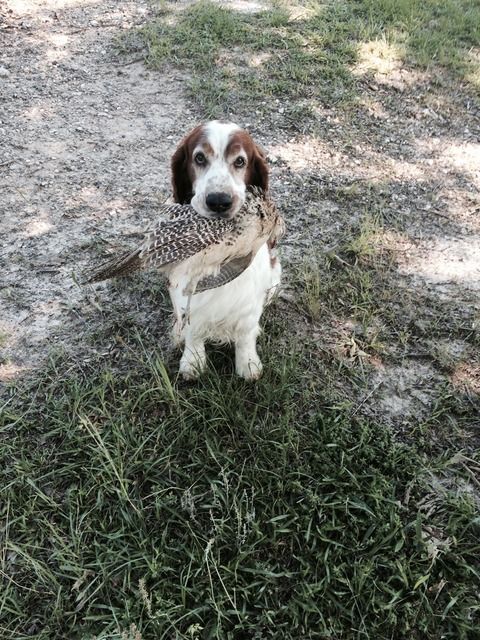
Larsen's land work was very nice. He put up a very trappable pheasant, and then stayed with me until I let him fetch it. His second bird flew off. That's the breaks, Larsen, and I guess you don't get to chase the bird into the next ZIP code.
We continued to work on delivery to hand. I'm pondering when it is right to correct him and when to wait him out. The corrections are done fairly gently. He knows what he has to do, so when he does not perform, there is some reason he wants to dismiss me or keep the bird.
His return from the hunt dead is very nice, but his land and water to-hand need some thought and work.
Tuesday, June 2, 2015
Outing at Circle W
Larsen received a compliment from Shoni. She noted that when he hunted down a pheasant hen, he poked at it and caused her to fly, then he rocked back and sat. Easily, he could instead have trapped the bird.
A gundog's job is to produce game for the gun. It is exciting to watch a dog leap high after a pheasant, but the dog's primary responsibility is to get the bird aloft. Larsen's actions, on a trappable bird, demonstrated that he has gotten deeper understanding of the game.
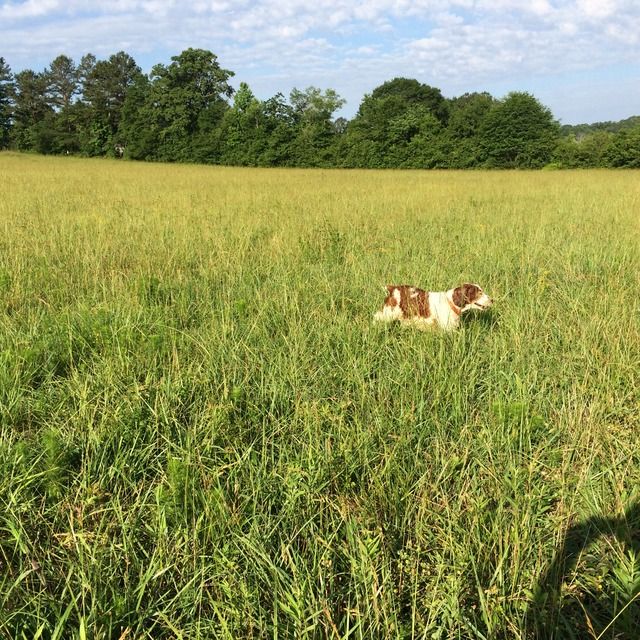 Larsen enjoys a run in the field at Circle W in Heflin, AL.
A gundog's job is to produce game for the gun. It is exciting to watch a dog leap high after a pheasant, but the dog's primary responsibility is to get the bird aloft. Larsen's actions, on a trappable bird, demonstrated that he has gotten deeper understanding of the game.
Wednesday, March 4, 2015
Burge training
I would not have traded the training time at Burge Plantation for the world. It made all of the difference for a dog that would sit on a sucker bird and return on a "leave it" command. It was a stressful number of days for Larsen, however, and that may have contributed to his near meltdown on Sunday.
However, I am convinced that we would not have gotten to that point without the practice time.
There is a balance between screwing the dog down and easing up on the pressure.
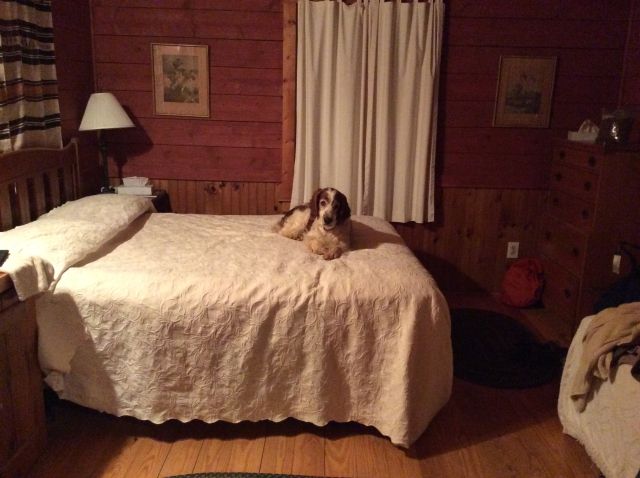
Here, Larsen enjoys a warm bed on a cold and sleeting February night between his work sessions in the field.
However, I am convinced that we would not have gotten to that point without the practice time.
There is a balance between screwing the dog down and easing up on the pressure.
Here, Larsen enjoys a warm bed on a cold and sleeting February night between his work sessions in the field.
Tuesday, January 20, 2015
Notes from Burge
From last December:
- Only allow Larsen to retrieve when I invite him to.
- Always go to him. Make him accept my head pat.
- Stay on my line when handling. Make him understand that I won't follow him around. We are hunting together.
- Control his ground.
- Command only once.
- Do not plead with the whistle.
- If not obeyed, go to a different method of enforcement.
- Mix up training or play.
- Sometimes call him away, then hunt him away.
- Perhaps send for the dead.
- Invite him to retrieve.
- One out of every 5 can I send him on a shot burd.
- Any time there is a hup, walk up to him and pat him. Then recast him or whatever.
- Keep a clip-wing with me. Toss it out when he's moving and tell him to leave it.
- That's my fall-back.
- Challenge him on his retrieves. Don't let him go onto his retrieves. He knows this part.
Monday, May 26, 2014
Notes on the new era
Tim and I talked about the need for building on a succession of small successes. We walked Larsen in the field. Tim said he did not get wound up when Larsen dawdled a bit, and that the dog would soon enough return to the front, which he did. We toured the yard and periodically Tim threw out a pigeon.
Larsen sat at the fluttering bird, which on some tosses was beating its wings directly into the dog's face. I did not whistle to sit. Larsen knew that he was to sit, and he did. I reinforced with a pip.
Understand, please, that pigeon are not gamebirds and that the dog's reaction to pigeon is not as amped. However, successful sits to the flush build that sight picture in Larsen, and help him see that I am pleased and happy at his sit.
We later switched to chukar and had a good success with a sucker bird. Larsen sat at my command, even though the bird was really his.
Some of our work was a bit ragged, with me early or late with the whistle. But we kept the work very low key, and very simple and earned our successes.
Larsen had a nice hunt-dead on a long-flying shot bird. The bird got up on its own accord. I hupped Larsen and Tim shot the bird, which continued to the tree line. Larsen marked it and hunted it down.
The day was hot, so there was a lot of time in between as we cooled Larsen down. Lots of ice and misty spray, and, finally, some water work to get him cool down to his skin.
Larsen sat at the fluttering bird, which on some tosses was beating its wings directly into the dog's face. I did not whistle to sit. Larsen knew that he was to sit, and he did. I reinforced with a pip.
Understand, please, that pigeon are not gamebirds and that the dog's reaction to pigeon is not as amped. However, successful sits to the flush build that sight picture in Larsen, and help him see that I am pleased and happy at his sit.
We later switched to chukar and had a good success with a sucker bird. Larsen sat at my command, even though the bird was really his.
Some of our work was a bit ragged, with me early or late with the whistle. But we kept the work very low key, and very simple and earned our successes.
Larsen had a nice hunt-dead on a long-flying shot bird. The bird got up on its own accord. I hupped Larsen and Tim shot the bird, which continued to the tree line. Larsen marked it and hunted it down.
The day was hot, so there was a lot of time in between as we cooled Larsen down. Lots of ice and misty spray, and, finally, some water work to get him cool down to his skin.
Thursday, May 22, 2014
Learning, but slowly
Learning slowly: I'm talking about myself here. My newly evolving personal mantra is to make sure that Larsen is 100% successful on every contact with a bird, no matter how contrived the exercise has to be.
Here is Springerdude (a/k/a Tim B.) making that point (bolding is mine):
In reference to Josh's comment about bringing dog back and then sending for the retrieve after a break, I guess the process works by teaching the dog that you will send for the retrieve and that it is OK to wait for the command.
I like the suggestion to only set the dog up to be successful. If you think or know that a problem could occur with particular situation, then don't do the drill in that manner.
What I have learned in the last two years is to keep things easy and fun with lots of repetition doing things the right way. Make it easy for the dog to react the correct way. If the dog does not react the way you would like, then make the drill easier. Lots of repetitions doesn't mean "many times each day". It means a few times many days.
Most of my training is in Urban America. Bumpers mostly, dead birds some, clip wings minimal, flyer's sporatically. With the right dog, this has worked. I had one dog that it didn't work with.
Some comments of my own:
Here is Springerdude (a/k/a Tim B.) making that point (bolding is mine):
In reference to Josh's comment about bringing dog back and then sending for the retrieve after a break, I guess the process works by teaching the dog that you will send for the retrieve and that it is OK to wait for the command.
I like the suggestion to only set the dog up to be successful. If you think or know that a problem could occur with particular situation, then don't do the drill in that manner.
What I have learned in the last two years is to keep things easy and fun with lots of repetition doing things the right way. Make it easy for the dog to react the correct way. If the dog does not react the way you would like, then make the drill easier. Lots of repetitions doesn't mean "many times each day". It means a few times many days.
Most of my training is in Urban America. Bumpers mostly, dead birds some, clip wings minimal, flyer's sporatically. With the right dog, this has worked. I had one dog that it didn't work with.
Some comments of my own:
- Let Larsen know that he will get the bird. Be fair. If he sits, he gets the bird. Don't walk up and pat his head or call him to you. That's more advanced work. Right now, hup = bird.
- Be successful. Larsen loves showing off. He wants to do the right thing. If he does, he gets the reward. There is no sense in setting him up with 50:50 chance of getting it right. Get it right every time and them move to a new challenge.
- Practice doesn't make perfect: Perfect practice makes perfect. Lots of repetition doing things the right way. Make it easy for the dog to react the correct way. If he doesn't react the correct way, make it easier.
Monday, May 19, 2014
Something for everyone
The rain held off long enough for our practice on Sunday. The temperature was an atypical mid-50s at the warmest. The field was fresh and the dogs were friendly. Ready for their turns.
- Aubrey began to learn how to hunt. She moved downwind and then worked her way up. The beautiful golden may think she is a spaniel!
- Sunny tracked down a nicked chukar, reflushed the bird, kept on it, and brought it back to hand. A perfect next-hemisphere retrieve.
- Zelda worked for Frank. Checking for instruction, coming in when called, and then casting in an intelligent direction.
- Humphrey set aside his own thoughts and ideas long enough to obey Cathy. Or maybe Humphrey decided that Cathy finally was on the right wavelength. Either way, the outing was a delight to watch.
- Larsen brought one bird in Humphrey-style: A wing positioned over nose and one eye. Larsen showed what he could do when he understood the game. A hunt dead, water blind, and water retrieve ended our fine day.
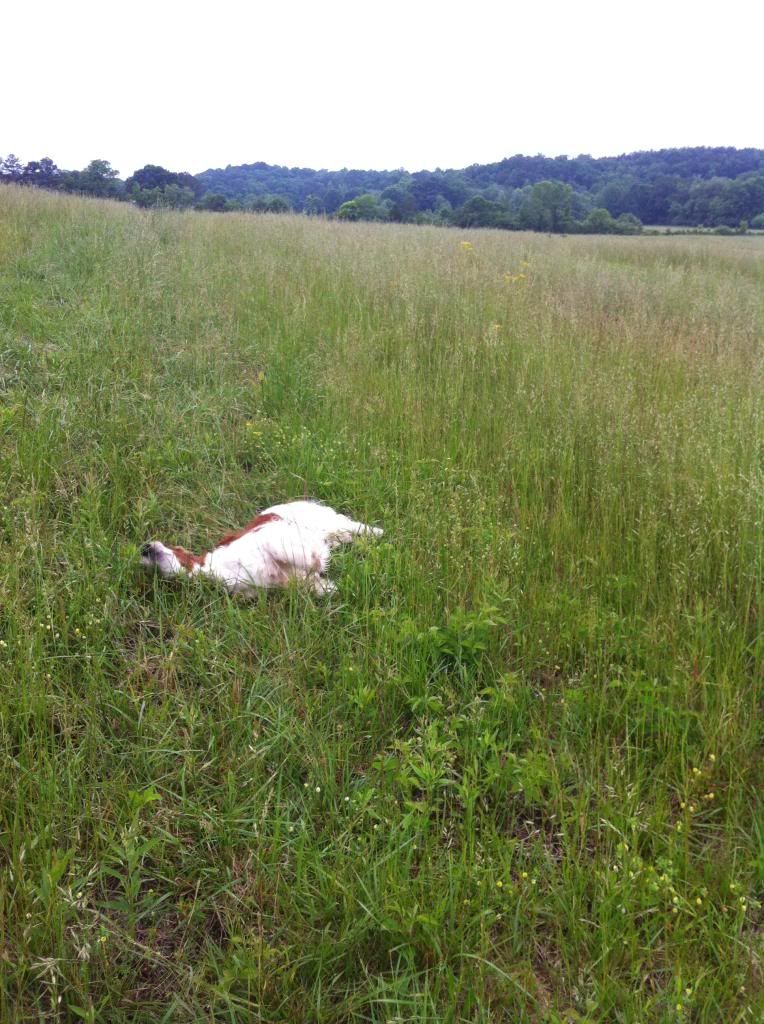
Larsen earned his roll in the grass on a rare day when all of the dogs did well.
Sunday, May 18, 2014
Training notes
It's been a long while since Larsen and I have had any successes. Today we had three. Sunny, Zelda, Aubrey, and even the thinker himself, Humphrey, showed snap, crackle, and pop in the field. We looked at each other to wonder what had gotten into the dogs, as each seemed to outdo the other.
I told Cathy and Shoni that I needed a success with Larsen. We set up the simple drill where the bird is practically at your feet and you call your dog toward you for a flush and a sit. In this case, the bird on its own accord elected to make a break, flying perpendicular to the line. I asked Shoni to shoot, and she did. Larsen had not moved an inch, so I told him to get the bird, which he did. Cathy later confessed that the whole episode happened so quickly she barely understood what had just happened. The keys in my mind were:
I told Cathy and Shoni that I needed a success with Larsen. We set up the simple drill where the bird is practically at your feet and you call your dog toward you for a flush and a sit. In this case, the bird on its own accord elected to make a break, flying perpendicular to the line. I asked Shoni to shoot, and she did. Larsen had not moved an inch, so I told him to get the bird, which he did. Cathy later confessed that the whole episode happened so quickly she barely understood what had just happened. The keys in my mind were:
- I hit a timely stay whistle;
- Shoni was ready and shot as soon as she had a safe shot picture;
- I sent Larsen with all dispatch and did not fool with him. Fair, firm, fun. He sat, and he was awarded. This is fair in his mind.
We had two more turns - - contrived to be sure, but what counts right now is (1) success; and (2) fairness. Larsen sat and he was sent. If A then B.
Tuesday, May 6, 2014
He's still got it
Larsen took off after a cat at Keswick Park and paid the price.
Off went that dog despite my whistle. Up into the dense forest. I tracked him up the vine- and deadfall-covered bank trying to hunt him down. Larsen doubled back to pick up the cat's trail. About 10 or 15 yards out, on a crossing pattern, I threw one of the two fetch-dummies I had and popped him in his rear end. He yelped, I whistled, he sat.
I walked to him, clipped him up and we continued our walk as though nothing at all had happened. Good dog!
On the way back, I unclipped Larsen and told him to "fetch". Off he went, into the dark leafy hillside. Back he came with my missing fetch dummy.
Making lemonade out of lemon, I would say, and our friend Marilyn, with her water bottle, might agree.
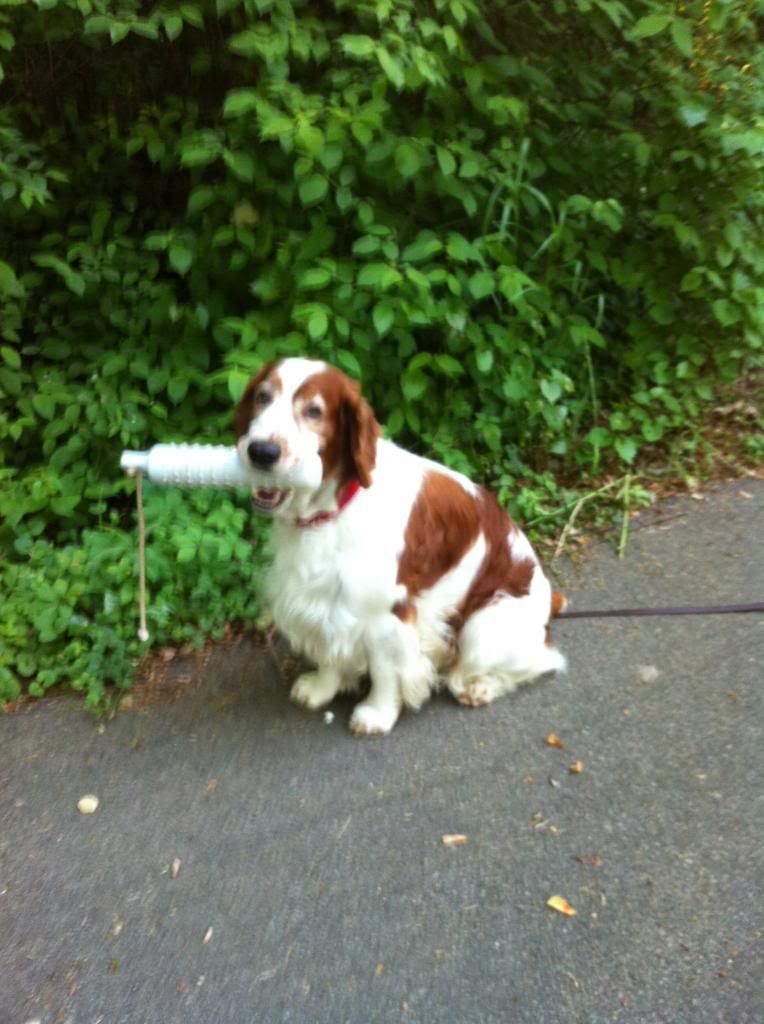 Larsen returns with the fetch dummy.
Off went that dog despite my whistle. Up into the dense forest. I tracked him up the vine- and deadfall-covered bank trying to hunt him down. Larsen doubled back to pick up the cat's trail. About 10 or 15 yards out, on a crossing pattern, I threw one of the two fetch-dummies I had and popped him in his rear end. He yelped, I whistled, he sat.
I walked to him, clipped him up and we continued our walk as though nothing at all had happened. Good dog!
On the way back, I unclipped Larsen and told him to "fetch". Off he went, into the dark leafy hillside. Back he came with my missing fetch dummy.
Making lemonade out of lemon, I would say, and our friend Marilyn, with her water bottle, might agree.
Wednesday, April 30, 2014
Good dog going bad and then back to good
Here's how a good retrieving dog goes bad and what we did to make it good.
Larsen has become a pretty good retriever, but on his own terms and not yours. He is not above setting a bird down a foot in front of you rather than bringing it to your side and to your hand. This is a never-ending issue with Larsen, who either improves or deteriorates but never stands still.
We did a little yard work to overcome this resistance.
We played some fun fetch with a squeaky toy. Larsen eagerly retrieved, but did not want to give it up. Look at the photos. You will see that Larsen looks everywhere except eye-to-eye with me. He loved the chase. He loved the retrieve. But he was conflicted on the fetch & give because he wanted to keep the toy for himself. He sidled up to me, but would not look at me and offer me the gift.
So we sat there and enjoyed one another's company. Me breathing in the spring air, and Larsen being a pistol. At some point he looked up at me; possibly out of sheer curiosity. I gently said "good boy - - give" and took the squeaky toy.
I didn't tug at the squeaky toy. I didn't blow at Larsen's nose, or pinch his cheek. These actions may all have their places in establishing a nice fetch, but sometimes playing a calming mind game with a spaniel can teach a dog a new trick.
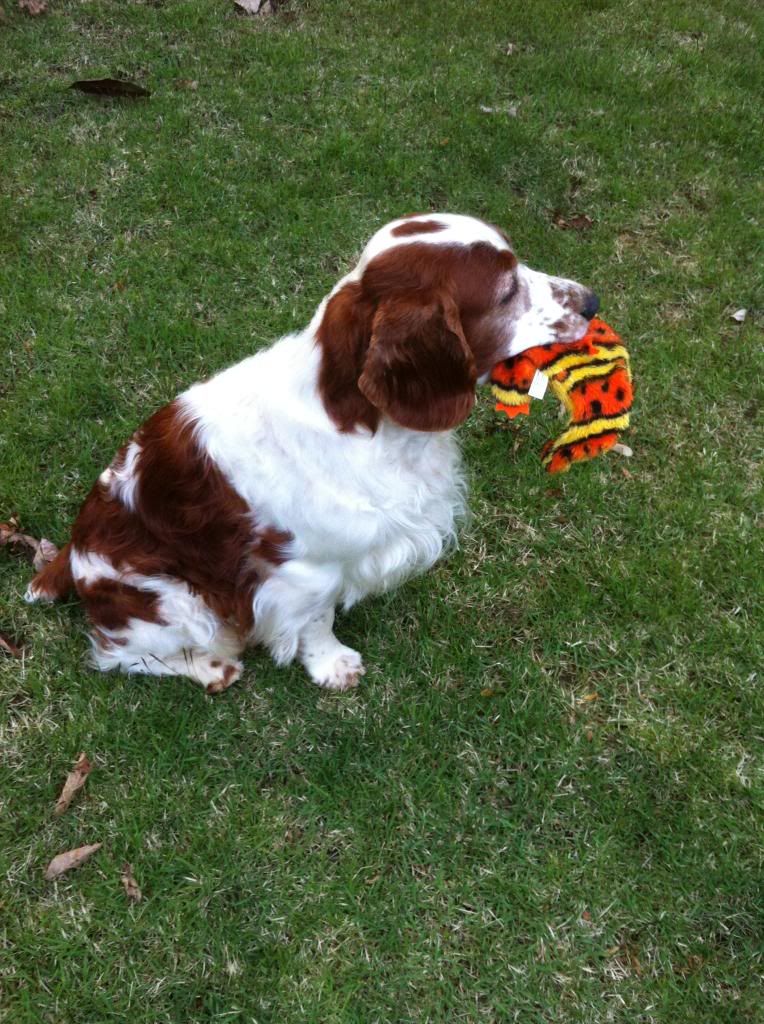
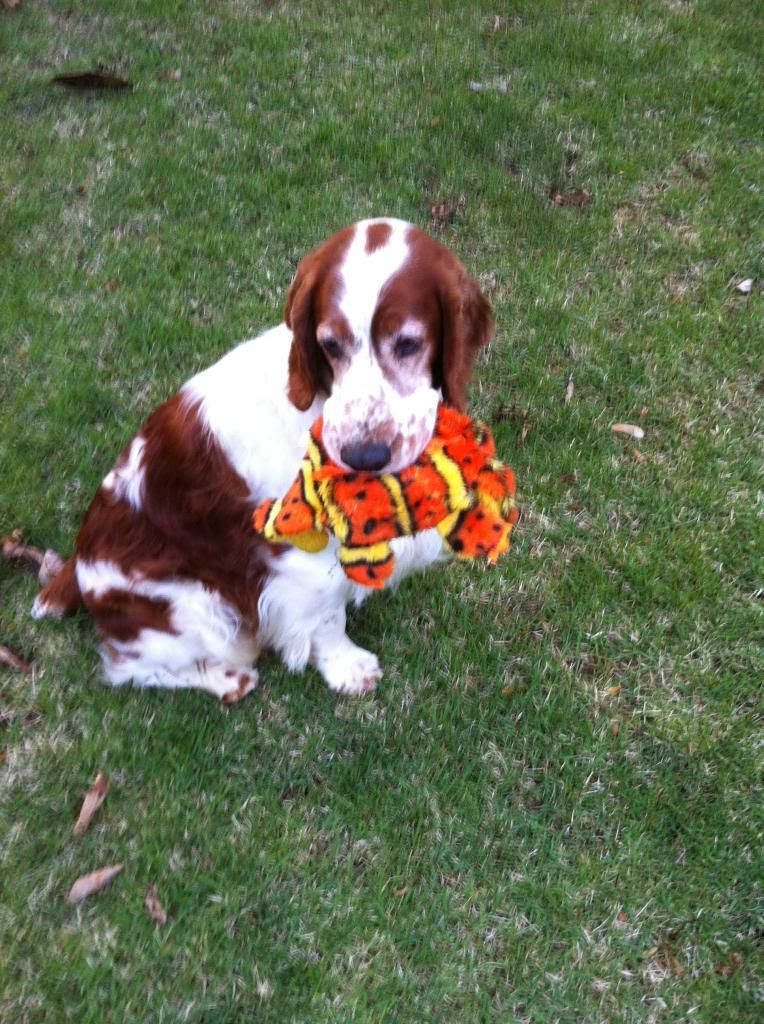
Larsen has become a pretty good retriever, but on his own terms and not yours. He is not above setting a bird down a foot in front of you rather than bringing it to your side and to your hand. This is a never-ending issue with Larsen, who either improves or deteriorates but never stands still.
We did a little yard work to overcome this resistance.
We played some fun fetch with a squeaky toy. Larsen eagerly retrieved, but did not want to give it up. Look at the photos. You will see that Larsen looks everywhere except eye-to-eye with me. He loved the chase. He loved the retrieve. But he was conflicted on the fetch & give because he wanted to keep the toy for himself. He sidled up to me, but would not look at me and offer me the gift.
So we sat there and enjoyed one another's company. Me breathing in the spring air, and Larsen being a pistol. At some point he looked up at me; possibly out of sheer curiosity. I gently said "good boy - - give" and took the squeaky toy.
I didn't tug at the squeaky toy. I didn't blow at Larsen's nose, or pinch his cheek. These actions may all have their places in establishing a nice fetch, but sometimes playing a calming mind game with a spaniel can teach a dog a new trick.
Saturday, March 8, 2014
Genuine steady
Maybe it's been my time running Zelda or maybe it is something inside Larsen himself, but there is a genuine connection in our outings. This connection was electric today when Larsen was steady - - sitting, no less - - to two birds at Tim's.
Tim's plan was as follows:
First, we quartered Larsen on an empty field. The field turned out to be not empty after all, as two of Tim's pigeons landed and strutted about. Larsen got wound up as he got closer to the birds, but we continued to quarter. The birds flushed themselves, so we heeled Larsen off the field.
This led to step two. Larsen was put onto the place board and we walked around him. A radio played in the background, and kenneled dogs whined. The effect was to disturb tranquility. Tim shot his starter pistol and, on occasion, tossed a pigeon into the mix. Larsen was interested and eager, but ultimately settled down. That was important, Tim said.
Now for step three. I kenneled Larsen in the car. Tim and I visited with Tim's little boy, Carsen, and we let Larsen cogitate on everything that had occurred. Tim said that spaniels are thinking dogs and that Larsen would consider the events of the day.
Finally: step four. Tim put out a bird and I quartered Larsen. The wind was at our back, so Larsen found the bird coming in to me, not far off. Tim shot and missed and I pipped the dog in.
On the second bird, Larsen flushed the bird and sat, as he had done on the first. I kept my eye on Larsen and Tim shot the bird, which came down a good 40 yards off. Larsen lost sight of the bird, so we enjoyed a hunt-dead.
This was an outing with two genuine sits-to-wing-and-shot, a hunt dead, and a successful retrieve. This is real progress.
Tim's plan was as follows:
First, we quartered Larsen on an empty field. The field turned out to be not empty after all, as two of Tim's pigeons landed and strutted about. Larsen got wound up as he got closer to the birds, but we continued to quarter. The birds flushed themselves, so we heeled Larsen off the field.
This led to step two. Larsen was put onto the place board and we walked around him. A radio played in the background, and kenneled dogs whined. The effect was to disturb tranquility. Tim shot his starter pistol and, on occasion, tossed a pigeon into the mix. Larsen was interested and eager, but ultimately settled down. That was important, Tim said.
Now for step three. I kenneled Larsen in the car. Tim and I visited with Tim's little boy, Carsen, and we let Larsen cogitate on everything that had occurred. Tim said that spaniels are thinking dogs and that Larsen would consider the events of the day.
Finally: step four. Tim put out a bird and I quartered Larsen. The wind was at our back, so Larsen found the bird coming in to me, not far off. Tim shot and missed and I pipped the dog in.
On the second bird, Larsen flushed the bird and sat, as he had done on the first. I kept my eye on Larsen and Tim shot the bird, which came down a good 40 yards off. Larsen lost sight of the bird, so we enjoyed a hunt-dead.
This was an outing with two genuine sits-to-wing-and-shot, a hunt dead, and a successful retrieve. This is real progress.
Friday, February 21, 2014
Practice notes
Last Sunday, I had Larsen on the long cord. I successfully sat him to the flush and shot. His second bird was a nick, and I mistakenly sent him for a dead bird instead of walking up and hunting it. The generally unharmed bird took flight and Larsen broke. I can get a steady only in extremely controlled circumstances. Still, it is a start.
Larsen and I later went to work on water, and while I was there I tossed the bird and pipped him to sit. He enjoyed that game and on a turn or two sat before the whistle.
Meanwhile, my efforts with Zelda were a little clumsy. She self-hunted for a while and I had to pull her in (using the whistle) and recast her a few times. However, both Tim and Cathy have remarked that my own efforts with both Zelda and Larsen are looking better. Quieter and more authoritative. That is a tribute to working with an exceptional dog and being able to focus on one's own actions.
Larsen and I later went to work on water, and while I was there I tossed the bird and pipped him to sit. He enjoyed that game and on a turn or two sat before the whistle.
Meanwhile, my efforts with Zelda were a little clumsy. She self-hunted for a while and I had to pull her in (using the whistle) and recast her a few times. However, both Tim and Cathy have remarked that my own efforts with both Zelda and Larsen are looking better. Quieter and more authoritative. That is a tribute to working with an exceptional dog and being able to focus on one's own actions.
Sunday, February 9, 2014
Training ideas
Larsen broke at the flush on his first real bird. Ultimately Tim and I reset the field and I whistled Larsen to a sit in a nicely choreographed setting:
- The bird flushed over my head
- Larsen was only a few feet from me and looking into my eyes as I whistled
- He sat. Tim swung and hit the bird as it disappeared into the treeline.
- When on long lead, get Larsen patterning. Keep him close but don't honk on the whistle. Quiet commands. If he is not paying attention, page him with the e-collar.
- Hit the sit whistle a few times to be sure he's in control.
- While he is patterning, toss a few deads and have him sit.
- Pick the deads up myself.
- On occassion, put down a clip or an actual bird when you pick up the dead.
- Re-quarter Larsen, and let him flush up the bird. Make sure the long lead is tight in hand.
Tim thought that this would be more useful than the simple drill. Tim also thought that it was important to go back to the beginning with Larsen, insofar as he seems to have forgotten or otherwise chosen to ignore what he knows about steady.
Saturday, January 18, 2014
Retriever v Springer training program
I would say the progress and steps are a lot the same.
Same Obedience
Same on Retrieving
The difference is probably the Distance of the Marks and Blinds and The number of repetitions in a drill
You still need the foundational steps to build on. For Retriever events, you really need to teach a dog to stay on a straight line even when doing water across the edge of a pond or slough. Spaniels, not so much.
Dogs will naturally try to use the wind to their advantage when questing for game. so you just teach them to turn with the whistle in order to not miss ground. This is not as noticeable in the thickets but more easily seen in the open fields.
h/t/ SpringerDude
Same Obedience
- Sit
- Stay
- Come
Same on Retrieving
- Hold
- Quick delivery
- Marking
- Handling
- Lining drills
- Blind retrieves
The difference is probably the Distance of the Marks and Blinds and The number of repetitions in a drill
You still need the foundational steps to build on. For Retriever events, you really need to teach a dog to stay on a straight line even when doing water across the edge of a pond or slough. Spaniels, not so much.
Dogs will naturally try to use the wind to their advantage when questing for game. so you just teach them to turn with the whistle in order to not miss ground. This is not as noticeable in the thickets but more easily seen in the open fields.
h/t/ SpringerDude
Monday, December 30, 2013
Steadying tips
You can also hand toss the birds when you want a flyer and teach the dog to stop when it sees the bird. You can also tape wing the flyer when the dog becomes reliable at stopping when the bird is thrown, then you can send the dog for the retrieve. If the dog is easy on the bird, you can recycle this bird over a period of time.
When you are tossing the flyer, the dog will not quarter well because it knows that you have the birds and you are going to toss them. That is OK. Don't fuss at the dog to get it to quarter. You are teaching it to watch you and stop on a flyer. No need to confuse the dog with trying to teach several things at once. As the dog learns this routine, you can plant a couple taped winged birds in the field for the dog to find and not toss a flyer. You can use the taped wing birds to help teach the quartering pattern and keep the flush hard, and then mix in a hand tossed flyer for a steady opportunity.
I feel that if I have the birds and the control of when the dog finds or sees one, then I stay the focus of their attention and they think I really do provide all of their "fun". When they think they can go find their own "fun", the control power starts to change a little. They will figure things out soon enough when you start hunting wild birds.
Lots of ways to get to the end result.
Thanks, and HT to SpringerDude
Sunday, November 24, 2013
Bird day
Went through quite a few birds in practice today, on this weekend before Thanksgiving. I saw where Larsen was on the curve, which is to say really at the beginning. Kind of surprising that he was so far back. But we have a new approach that might help with the control and then one can always hope for rapid progression once the learning kicks in.
Wednesday, November 20, 2013
Place board training
Trainer Joe DeMarkis confesses to a revelation: obedience training has direct applicability to a field dog. This might be obvious, or it might not, but if it is true it opens the door to many training activities that those who live in cities and suburbs can do on a weeknight without benefit of birds or firearms.
One of these revelations is the so-called place board. Joe says that dogs are place-oriented and that generalizations come hard. Train the dog to understand that his place is on the place board, and then advance to more challenging scenarios.
The place board can be as simple as a repurposed Welcome mat, but ideally, it is raised off the ground. This gives the dog bit of a feeling of not being fully in control (you are!) and it also makes it more convenient to work with smaller dogs. In the photo below, Larsen is on a place board that is raised about an inch, but other place boards are about a foot or so from the ground. The place board must be stable so that the dog is not fearful of the wobbling.
Introduce the dog to the place board by leading him or her onto it and commanding a sit. Treat liberally. Over time, you will get the dog to go to the place board on command. Once this is reliably accomplished, you can have the dog retrieve items and return to the place board.
What a great way to improve the beautiful spaniel retrieve to hand!
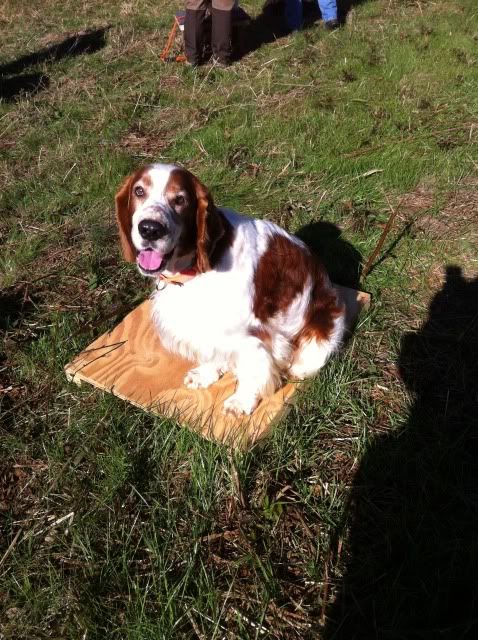 Larsen demonstrates his place board.
One of these revelations is the so-called place board. Joe says that dogs are place-oriented and that generalizations come hard. Train the dog to understand that his place is on the place board, and then advance to more challenging scenarios.
The place board can be as simple as a repurposed Welcome mat, but ideally, it is raised off the ground. This gives the dog bit of a feeling of not being fully in control (you are!) and it also makes it more convenient to work with smaller dogs. In the photo below, Larsen is on a place board that is raised about an inch, but other place boards are about a foot or so from the ground. The place board must be stable so that the dog is not fearful of the wobbling.
Introduce the dog to the place board by leading him or her onto it and commanding a sit. Treat liberally. Over time, you will get the dog to go to the place board on command. Once this is reliably accomplished, you can have the dog retrieve items and return to the place board.
What a great way to improve the beautiful spaniel retrieve to hand!
Monday, October 21, 2013
Field time
Larsen was back in the field on Sunday after his conformation showings with Aki Friday and Saturday in Jonesboro, Georgia.
The highlight of the morning for Tim and me was sending Larsen after a cripple. Neither of us knew any more than the general area where the bird went down. Moreover, we did not pursue the bird right away. Instead, after the shot and lost bird, we went back to field training and forced Larsen to quarter, flush, and sit.
Tim decided that the time was right, and I heeled Larsen toward the general area. I then sent him as I would for field work. Tim told me not to send him on a hunt-dead because we were not asking him to take a line anywhere. We wanted him to hunt.
Tim and I sat back and watched as the dog worked a deadfall, then moved upfield along the tree line. He wheeled and doubled back, working the air and the ground. This was all Larsen. We were spectators. We heard the cluck of the chukar as it tried to run, but Larsen was on him. Larsen brought him back for the retrieve.
As much fun as it is to train the dog, it is inspiring to see the spaniel take the initiative and bring back the bird.
The highlight of the morning for Tim and me was sending Larsen after a cripple. Neither of us knew any more than the general area where the bird went down. Moreover, we did not pursue the bird right away. Instead, after the shot and lost bird, we went back to field training and forced Larsen to quarter, flush, and sit.
Tim decided that the time was right, and I heeled Larsen toward the general area. I then sent him as I would for field work. Tim told me not to send him on a hunt-dead because we were not asking him to take a line anywhere. We wanted him to hunt.
Tim and I sat back and watched as the dog worked a deadfall, then moved upfield along the tree line. He wheeled and doubled back, working the air and the ground. This was all Larsen. We were spectators. We heard the cluck of the chukar as it tried to run, but Larsen was on him. Larsen brought him back for the retrieve.
As much fun as it is to train the dog, it is inspiring to see the spaniel take the initiative and bring back the bird.
Sunday, September 29, 2013
Saturday training
Larsen and I stopped by Tim's on a cool early fall morning. We worked the field and then did some water work. At the water, I pushed Larsen across the pond by following Susan's advice of ordering Larsen "back" every time he started to curl around or look back toward his home bank. Susan said that she had to push Mazie across and that by the time the dog looks at you it is nearly too late.
Once on the other side, I had to handle Larsen back and forth to find the dummy. Finally, and after Larsen had gone into the water and back out, he jumped on the dummy and brought it back. What a great note to stop on!
Earlier, on the field, we worked Larsen on fly-off pigeons. Larsen did fine and hupped himself before I hit the whistle. We sat Larsen on blank pistol shots and on flush-and-fly-offs. I worked on timing and thought about precisely when to hit that whistle.
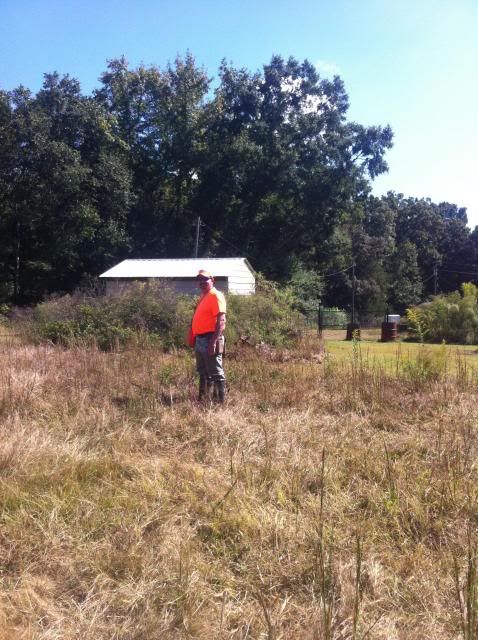 Tim was ready with his blank pistol.
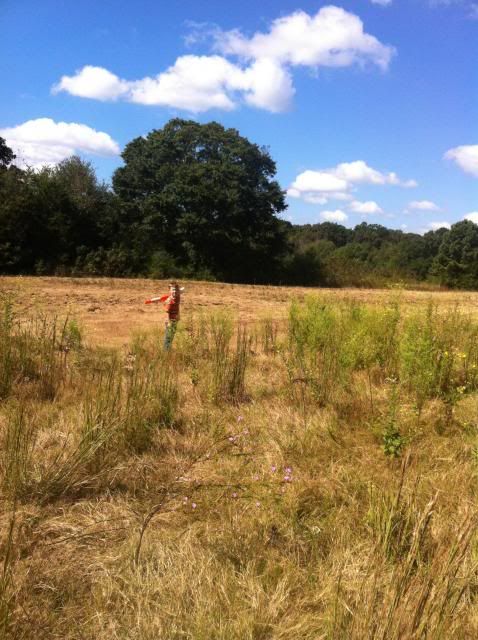 Carson held down the other side of the line with his toy shotgun.
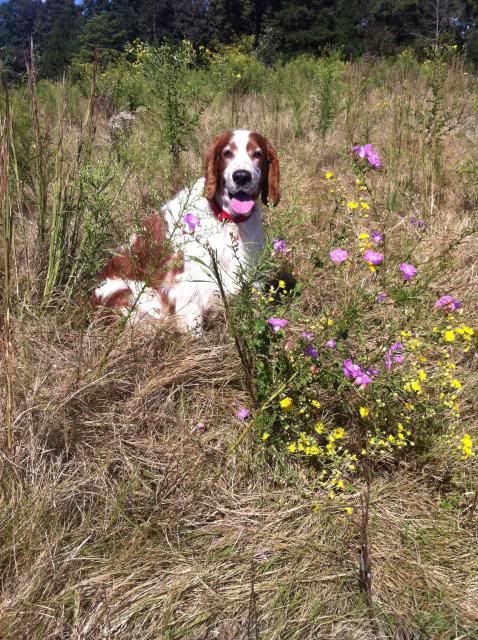
Larsen enjoys the early fall the scene.
Once on the other side, I had to handle Larsen back and forth to find the dummy. Finally, and after Larsen had gone into the water and back out, he jumped on the dummy and brought it back. What a great note to stop on!
Earlier, on the field, we worked Larsen on fly-off pigeons. Larsen did fine and hupped himself before I hit the whistle. We sat Larsen on blank pistol shots and on flush-and-fly-offs. I worked on timing and thought about precisely when to hit that whistle.
Larsen enjoys the early fall the scene.
Subscribe to:
Posts (Atom)


